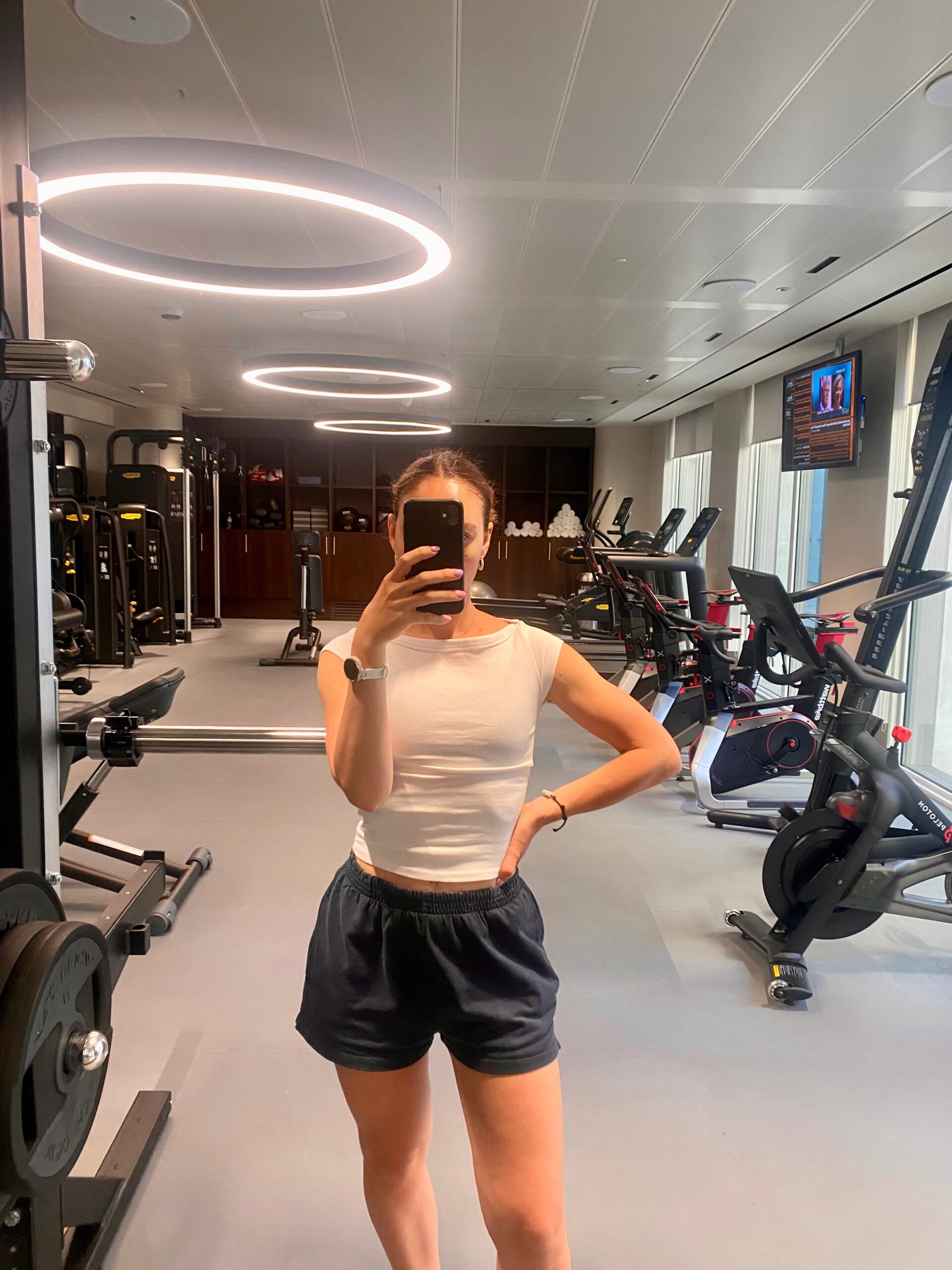
Pilates, especially Reformer Pilates, has been everywhere for a while now. And lately, I’ve noticed more and more workout plans combining Pilates with strength training.
As both a personal trainer and Pilates instructor, I’ve practised both for years, and honestly, I don’t think you should to choose to only do one of the two.
I think Pilates and strength training complement each other really well.
They each bring something different to your training, and combining the two can create a more balanced approach to fitness — helping you build strength while also working on mobility, control, posture and body awareness.
And while this article is about Pilates and strength training, I’m leaving cardio out of the conversation for now. If you want to read about that side of fitness, you can check out my article on the benefits of cardio.
Can Pilates and strength training give you a leaner look?
This is probably one of the biggest reasons people are interested in combining the two.
You’ll often hear Pilates described as creating a “long, lean” look, while strength training is associated with building muscle.
But I think it’s worth looking at this a little differently.
Your overall appearance is influenced by many things, including your genetics, body composition, nutrition, activity levels and the type and amount of training you do.
Pilates itself doesn’t magically make muscles longer, and strength training doesn’t automatically make you bulky.
Instead, combining different types of movement can help you develop a strong, capable and balanced body.
For me, that is much more interesting than simply chasing a particular look.
The benefits of Pilates

There’s a reason Pilates has become so popular.
Whether you’re doing mat Pilates or Reformer Pilates, the practice focuses heavily on controlled movement, stability, posture, coordination and body awareness.
One of the things I particularly like about Pilates is how much attention you have to give to the way you move.
You’re not simply trying to complete as many repetitions as possible. You’re thinking about your breathing, your positioning, your control and how your body is working throughout the movement.
Pilates can help you work on:
- Core control
- Balance and stability
- Mobility
- Coordination
- Posture
- Body awareness
- Movement control
- Muscular endurance
Reformer Pilates can also add resistance through the springs, making exercises more challenging while still keeping that controlled Pilates approach.
For me, Pilates is a great way to complement other forms of exercise rather than necessarily replacing them.
Why strength training is so important
Now for the other side of the equation.
Strength training is one of my favourite ways to build a strong and capable body.
It gives you the opportunity to progressively challenge your muscles through resistance, whether that comes from dumbbells, machines, resistance bands, cables or your own bodyweight.
And strength training doesn’t have to mean lifting extremely heavy weights.
You can train for strength in lots of different ways and adapt your workouts depending on your goals, experience and preferences.
Strength training can help you develop:
- Muscle strength
- Muscular endurance
- Stability
- Coordination
- Confidence with movement
- Functional strength for everyday life
- Maintaining and building muscle mass
I also think there is something very satisfying about getting stronger.
Being able to lift something that once felt difficult or control a movement that you couldn’t do before is a much more useful measure of progress than simply looking at the number on the scales.
The power of doing both

Pilates and strength training don’t have to compete with each other.
They can actually work very well together.
Strength training gives you the opportunity to challenge your muscles and build strength, while Pilates gives you plenty of practice with controlled movement, stability and body awareness.
Rather than asking:
“Should I do Pilates or strength training?”
I would ask:
“How can I use both to create a routine that I actually enjoy?”
Because ultimately, the best workout routine is one you can stick to.
And doing different types of exercise can also make your week feel much more interesting.
One day you might be lifting weights. Another day you could be moving through a Reformer session. You don’t need every workout to feel the same.
How to combine Pilates and strength training
There isn’t one perfect combination.
The right balance depends on your fitness level, how much time you have and, most importantly, what you enjoy.
Here are a few simple ways you could combine them.
Option 1: Strength + Pilates in the same session
If you like getting everything done in one workout, you could combine the two.
For example:
3 sessions per week
Start with strength training → finish with Pilates
You could spend the first part of your workout focusing on your main strength exercises and then finish with a shorter Pilates-inspired section focusing on core control, mobility and movement.
I like this option because you get the benefits of both without needing to dedicate separate days to each.
Just remember that if you’re doing both in one session, you don’t need to make both parts extremely long.
Quality over quantity.
Option 2: Two strength days + one Pilates day
This could work well if you’re at an intermediate fitness level and strength training is your main focus. I would also choose this routine if you need to gain muscle.
For example:
Monday: Strength
Wednesday: Pilates
Friday: Strength
This gives you plenty of time between sessions and keeps Pilates as part of your weekly routine without taking over your training.
You could also switch the order depending on your schedule.
Option 3: Two Pilates days + one strength day
If you’re newer to exercise or simply prefer Pilates, you could flip the balance. I would choose this routine if I needed to gain mobility and improve posture.
For example:
Monday: Pilates
Wednesday: Strength
Friday: Pilates
This gives you more Pilates throughout the week while still keeping strength training in your routine.
And honestly, there is nothing wrong with choosing the version you enjoy more.
If you love Pilates and look forward to those sessions, you’re much more likely to stay consistent.
So, which one should you choose?

You don’t necessarily have to choose.
Pilates and strength training can both have a place in a well-rounded fitness routine.
If your goal is to feel stronger, move well and create a more balanced approach to exercise, combining different training styles can be a great option.
And if your goal is specifically to look leaner, remember that exercise is only one part of the picture. Your overall body composition is influenced by your nutrition, daily activity, training, genetics and other lifestyle factors.
There is no single workout that creates a particular body shape. So don’t get fooled by influencers that claim to look a certain way because of a magical workout routine.
What I do think is useful is finding a combination that makes you feel strong, mobile, confident and good in your body.That’s where Pilates and strength training work really well together.
My simple formula:
Strength to challenge the muscles. Pilates to practise control and planes of movement. Consistency to bring it all together.
And you don’t need to spend hours in the gym to make it work.
Start with three sessions a week, choose a combination you enjoy and adjust it as you go.
Fitness doesn’t have to be complicated.
Final thought

As someone who teaches both Pilates and strength training, I genuinely enjoy having both in my routine.
They’re different, but that’s exactly why I like combining them.
Rather than thinking of Pilates and strength training as two competing workout styles, think of them as two different tools that you can use depending on what your body and lifestyle need.
And if you enjoy both? Why choose?
Looking for more ways to move? Explore my Fitness & Movement articles for more workouts, Pilates ideas and practical fitness tips.
This article is based on my personal experience as a qualified personal trainer and Pilates instructor and is intended for general wellness and fitness information. It is not medical advice. If you have an injury, medical condition or specific health concern, seek advice from an appropriately qualified professional before starting a new exercise programme.
Leave a Reply