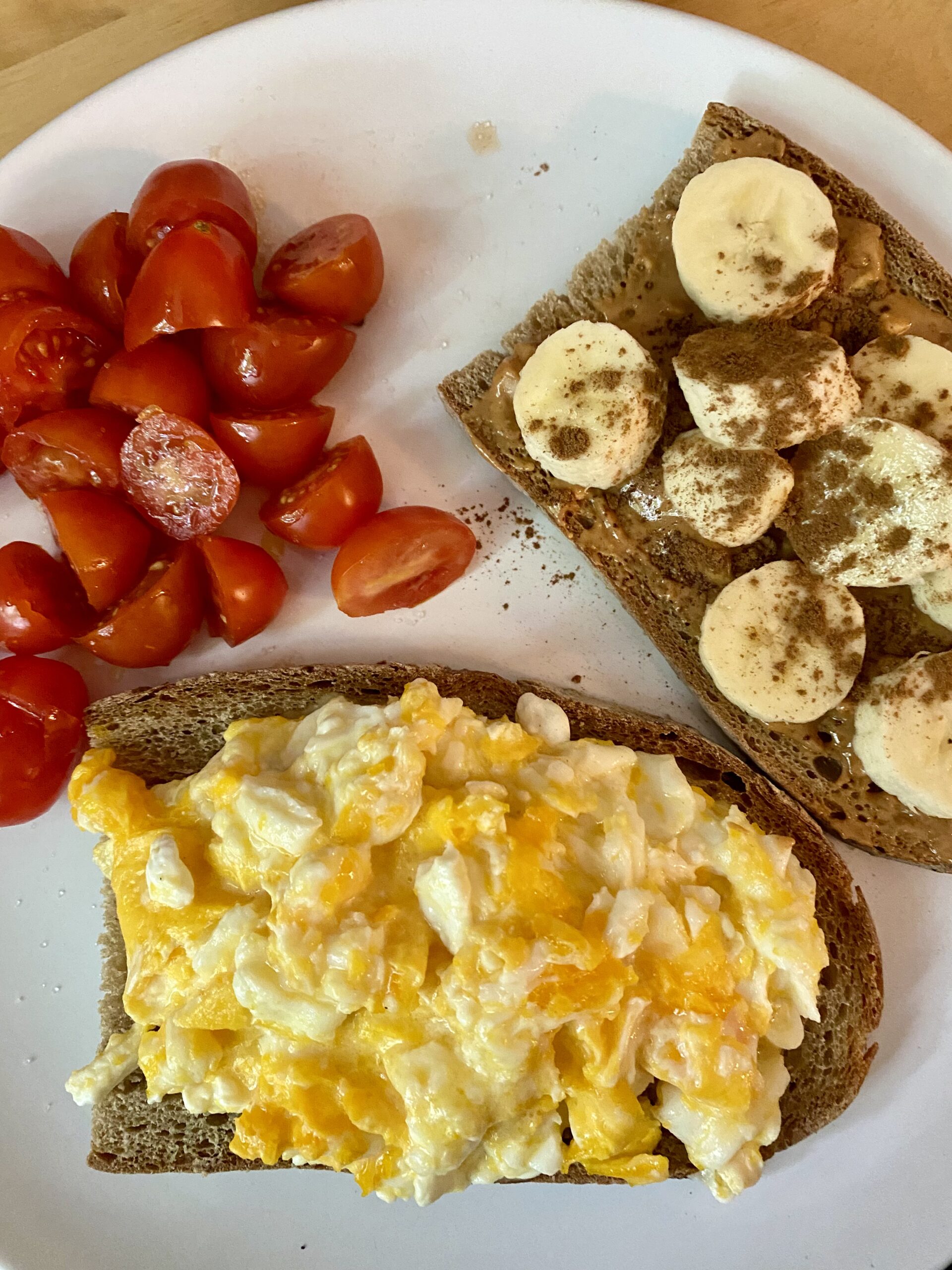
They say breakfast is the most important meal of the day — and while I don’t think breakfast has to be the biggest or most important meal for everyone, I do think how you start your day can influence how you feel for the next few hours.
If you wake up hungry, eating a proper breakfast can help you feel energised and satisfied. And if you’re not hungry first thing, there is nothing wrong with waiting until later to have your first meal.
But what should that first meal actually look like?
Recently, I’ve been doing a little research into the perfect breakfast and experimenting with my own morning meals.
The result?
I’ve become much more interested in protein, healthy fats and fibre, and a little less interested in starting the day with a bowl of something very sweet.
So let’s look at what makes a healthy breakfast — and whether we really need to give up our beloved porridge and toast.
Should breakfast be savoury?

One idea I’ve been experimenting with comes from Glucose Goddess / Jessie Inchauspé’s savoury breakfast approach.
Her recommendation is to make breakfast primarily about protein, alongside fat and fibre, with carbohydrates or fruit as optional additions.
The idea is pretty simple: rather than starting your morning with a meal dominated by sugar or refined carbohydrates, build your breakfast around foods that are more filling and satisfying.
Think:
- Eggs
- Greek yoghurt
- Smoked salmon
- Tofu
- Cottage cheese
- Cheese
- Nuts and seeds
- Avocado
- Vegetables
- A little sourdough or another wholegrain carbohydrate if you want it
This is very different from the classic breakfast of cereal, toast, juice and a sweet coffee.
And I have to say, I really like the simplicity of it.
You don’t have to completely remove carbohydrates. Instead, make protein the star of the plate rather than having carbohydrates do all the work.
Research also suggests that a higher-protein breakfast can increase feelings of fullness, although the effect depends on the individual and the overall meal. Read the research on protein intake and satiety.
Why is protein so important at breakfast?

If there is one thing I would pay more attention to when building breakfast, it is protein.
Protein is one of the main building blocks of the body, and including a good source at breakfast can make a meal feel much more satisfying.
For me, this is especially noticeable on mornings when I eat eggs or another protein-rich meal compared with when I just have yoghurt or something very light.
A breakfast built around protein could be:
- Eggs + cottage cheese + tomatoes
- Greek yoghurt + chia seeds + nuts
- Smoked salmon + egg + sourdough
It doesn’t need to be complicated.
And you don’t need to eat an enormous amount of protein either. The important thing is simply to include a meaningful protein source in your breakfast rather than having a meal that is almost entirely carbohydrate.
What does Gary Brecka eat for breakfast?
Another breakfast approach I’ve come across while researching this topic is from Gary Brecka.
Brecka is a human biologist and wellness personality who frequently shares his approach to nutrition and daily routines.
One breakfast combination I’ve seen him share includes eggs, fermented foods, sourdough with butter and berries.
And actually, I can see why this combination is appealing.
You have:
Eggs → protein and fat
Fermented foods → variety and flavour
Sourdough → carbohydrate
Butter → fat
Berries → vitamins and fibre
Rather than having one food group dominate the plate, you’ve got a mixture of different foods.
Of course, you don’t need to copy someone else’s exact breakfast to have a healthy morning meal. I think the more useful takeaway is the combination of protein, fat, fibre and optional carbohydrates.
What about oats? Can porridge still be a healthy breakfast?

I love oats, and I don’t think porridge is an unhealthy breakfast.
Oats provide fibre and are a wholegrain food. In fact, research comparing oatmeal with a typical ready-to-eat breakfast cereal found that oatmeal produced greater feelings of fullness in the study participants. Read the research on oatmeal and satiety.
So why have I become less interested in eating a huge bowl of plain porridge every morning?
For me, it comes down to what you put in it and how satisfying it is.
A bowl of oats can easily become:
Oats + banana + honey + maple syrup + dried fruit + granola + nut butter.
At that point, you’ve created a very sweet and carbohydrate-heavy breakfast. And that is what you often get when you order oats in a cafe or bakery!
Instead, if you love porridge, I would simply upgrade it.
Try:
- Oats
- Greek yoghurt or another protein source
- Chia or flax seeds
- Nuts or nut butter
- Cinnamon
- A small amount of berries
- Unsweetened milk
You can also have a smaller portion of porridge alongside a protein-rich breakfast rather than making a giant bowl of oats the entire meal.
And if porridge keeps you full and gives you good energy, there is absolutely no reason to stop eating it.
Yogurt for breakfast: my dos and don’ts
Yoghurt is one of my favourite quick breakfast options — but the toppings can completely change the meal.
DO:
Choose:
- Plain Greek yoghurt
- Natural full-fat yoghurt
- Chia seeds
- Flax seeds
- Nuts
- Nut butter
- Berries
- A protein-rich addition if needed
DON’T:
Turn it into dessert every morning with:
- Flavoured sugary yoghurt
- Lots of granola
- Honey
- Large amounts of dried fruit
- Several different sweet toppings
There’s nothing wrong with having these foods occasionally. But if the goal is a breakfast that keeps you satisfied for several hours, a bowl of plain yoghurt with protein, seeds and some healthy fats is a very different meal from yoghurt covered in granola, honey and dried fruit.
For me, yoghurt bowls are perfect for mornings when I’m not particularly hungry, I’m short on time or I want something light.
But I’ve noticed something interesting.
When I eat only yoghurt for breakfast, I tend to be hungrier later.
When I have a more substantial protein-based breakfast, I can often go several hours without thinking about food.
And that’s probably a useful lesson for me personally: the perfect breakfast is the one that actually keeps you satisfied.
Does breakfast need fibre?
Yes — but I wouldn’t obsess over making every breakfast a giant fibre bowl.
Fibre is an important part of a balanced diet and is naturally found in plant foods such as vegetables, fruit, oats, wholegrains, nuts, seeds and pulses.
So rather than worrying about getting a huge amount of fibre into breakfast, think about adding small, easy sources throughout the day.
Easy lower-sugar fibre additions for breakfast:
- Chia seeds
- Ground flaxseed
- Pumpkin seeds
- Nuts
- Berries
- Avocado
- Tomatoes
- Spinach
- Mushrooms
- Peppers
- Oats
- Wholegrain or sourdough bread
- Beans or lentils
And if you don’t want vegetables at breakfast, that’s okay too.
You don’t have to force spinach into your scrambled eggs just because Instagram says you should.
Your overall diet matters much more than whether your breakfast contains the perfect amount of vegetables.
Should we skip carbs at breakfast?

I don’t think so.
This is probably where I have changed my own breakfast habits recently.
I’ve been eating mostly carbohydrate-free breakfasts for the past few weeks, usually something based around protein and fat.
And honestly, I’ve really enjoyed it.
My energy feels stable, I’m not particularly hungry for around 3–5 hours afterwards and I don’t feel like I’m constantly thinking about food.
My go-to has been scrambled eggs with cheese, sometimes with yoghurt on the side.
But that doesn’t mean carbohydrates are bad.
The UK’s Eatwell Guide still recommends including starchy carbohydrates such as potatoes, bread, rice, pasta and other grains as part of a balanced diet, preferably choosing higher-fibre or wholegrain versions where possible. Importantly, these proportions are intended to describe your overall diet across a day or week, not that every individual meal needs to contain every food group.
So I’m not saying: “Don’t eat carbs at breakfast.”
I’m saying: “Don’t feel like breakfast has to be based around carbs.”
There is a difference. If you love sourdough, have sourdough. If you love porridge, eat porridge. If you feel great eating eggs and avocado, eat eggs and avocado. but try and follow the principles we discussed in this article.
However, a sweet pastry should definitely only be a once in a while breakfast, as it is more of a treat than anything else.
So, what is the perfect breakfast?
After researching this and experimenting with my own breakfast, I think the answer is actually much simpler than we make it.
A good breakfast doesn’t need to be Instagram-worthy. It doesn’t need ten superfoods. It doesn’t need to be completely carbohydrate-free.
And it definitely doesn’t need to involve an elaborate recipe at 6:30am.
Instead, I would start with:
1. Protein
Eggs, Greek yoghurt, cottage cheese, tofu, salmon, cheese or another protein source.
2. Healthy fats
Nuts, seeds, avocado, olive oil, nut butter or eggs.
3. Fibre
Vegetables, berries, chia seeds, flax, oats, wholegrains or other plant foods.
4. Carbohydrates — if you want them
Sourdough, oats, fruit, potatoes or another wholegrain/starchy carbohydrate.
5. Something you actually enjoy
Because healthy eating shouldn’t feel like punishment.
4 simple healthy breakfast ideas

Here are four breakfasts I’ve been enjoying lately that are incredibly easy to make.
1. Scrambled eggs with cottage cheese
Scramble your eggs and stir through some cottage cheese for extra creaminess and protein.
Add tomatoes, spinach or avocado if you fancy it.
Simple, savoury and very filling.
2. Smoked salmon & egg
Smoked salmon with a boiled egg and a little cream cheese.
Add cucumber, tomatoes or avocado and, if you want some carbs, a slice of sourdough.
Perfect when you want something savoury but don’t have time to cook much.

3. Natural yoghurt bowl
Plain Greek yoghurt + protein powder + chia seeds.
Add a few berries and some nuts if you want more texture.
My quick option for mornings when I don’t feel like a big breakfast.
4. Tomatoes & mozzarella
Tomatoes + mozzarella + olive oil + black pepper + sea salt.
Add basil if you have it.
You could also add a boiled egg or some sourdough if you want to make it more substantial.
Basically breakfast meets Italy , and I’m not complaining.
My perfect breakfast takeaway
After all this research, I’ve realised that I’m less interested in finding the one perfect breakfast and more interested in finding the breakfast that makes me feel good.
For me, that currently means starting with protein, adding some healthy fats and keeping breakfast fairly savoury.
Sometimes I’ll add vegetables. Sometimes I’ll have yoghurt. Sometimes I’ll add carbohydrates. And sometimes I’ll simply eat eggs and cheese and call it a day.
The biggest change has been moving away from the idea that breakfast has to be sweet like the common European breakfasts I grew up with like cereal, toast and jam , porridge or pastries.
There are so many other options.
So next time you’re standing in front of the fridge wondering what to eat, don’t overthink it.
Start with protein. Add something you enjoy. Add fibre or plants where it makes sense. Add carbohydrates if you want them.
And most importantly, pay attention to how that breakfast makes you feel for the next few hours.
Because the perfect breakfast maybe it’s simply the one that leaves you feeling energised, satisfied and ready for your day.
A few of my favourite breakfast principles
Protein first: Make it the foundation of your breakfast.
Don’t fear carbs: You don’t have to eliminate them to eat well.
Keep added sugar in check: Especially if your usual breakfast is already sweet.
Add fibre where you can: Seeds, berries, vegetables and wholegrains are easy options.
Don’t force breakfast: If you’re genuinely not hungry in the morning, you can eat later.
Keep it simple: Eggs and tomatoes can be just as good as a complicated recipe.
Make it enjoyable: Healthy food should still taste good.
Disclaimer
This article is for general wellness and educational purposes only and is based partly on my own experiences and research. It is not intended to provide medical, nutritional or personalised health advice. Everyone’s nutritional needs, preferences and lifestyle are different. If you have a medical condition, specific dietary requirements or concerns about your health or nutrition, speak with a qualified healthcare professional or registered dietitian for individual advice.
Leave a Reply