This week, I explored mindfulness classes as they become an increasingly popular part of the wellness industry. And honestly? I think we could all benefit from slowing down a little.
Luckily for me, I didn’t have to go far. I work in a spa, where recovery is just as much a part of the offering as fitness classes. In fact, it sometimes feels like recovery is becoming just as popular as working out!
I decided to try two experiences: a breathwork class and a one-to-one sound healing session.
After both sessions, I had one thought: “Wow, I needed that.”
Here is what I experienced, what different mindfulness classes involve, and why you might want to try one yourself.
What Is Mindfulness?

Mindfulness is simply about bringing your attention to the present moment instead of constantly thinking about what happened yesterday or what you need to do tomorrow.
It can be as simple as enjoying your morning coffee without scrolling on your phone, taking a walk without distractions, or spending a few minutes focusing on your breathing.
Mindfulness classes take this idea a little further by giving you dedicated time to relax, slow down and reconnect with yourself.
There are lots of different options, from guided meditation and breathwork to sound baths and restorative yoga.
According to the NHS guide to mindfulness, practising mindfulness may help support mental wellbeing and make it easier to manage everyday stress.
My Experience With Breathwork

I went to a breathwork class towards the end of a busy working day. You know those days when you have been doing a hundred things, your mind is still racing, and you feel like you have nothing left in the tank?
That was me.
The session involved continuous connected breathing to a powerful beat, followed by a long relaxation and guided meditation.
It was a very different experience from simply sitting quietly and trying to meditate.
By the end of the class, I felt energised. The best word I can use to describe it is reset. I felt as though I had regained the energy and motivation I normally have at the beginning of my day.
My colleague explained that breathwork can be a way to release physical tension and emotional responses, while certain breathing techniques may help us feel calmer and less stressed.
Research also suggests that breathwork may help reduce perceived stress, although results vary depending on the technique and individual.
You can read more in this research review on breathwork and stress.
What Is Breathwork?
Breathwork describes a range of breathing techniques designed to help you become more aware of your breath and how you feel.
Depending on the class, you might practise slow, gentle breathing or more active techniques with music and guidance from an instructor.
Potential benefits include:
- Taking a break from everyday stress.
- Feeling calmer or more energised, depending on the technique.
- Becoming more aware of your breathing and physical sensations.
- Creating space to process emotions.
- Supporting relaxation and a sense of wellbeing.
Breathwork classes can be quite different from one another, so check what the session involves before booking. More intense breathing techniques are not suitable for everyone, and it’s important to choose a qualified instructor who explains the process and offers modifications.
My Experience With Sound Healing

On another day, my colleague offered me the chance to try a private sound healing session.
The idea was to settle into a deeply relaxed, meditative state somewhere between being awake and falling asleep.
During the session, I felt almost as though I was dreaming while still being conscious of my surroundings.
Certain sounds brought up beautiful mental images. I found myself imagining a familiar terrace on a summer’s day and a peaceful beach.
By the end, I felt incredibly relaxed and dreamy, almost as though I was in my own little world.
I was left with a feeling of gratitude, love, peace and presence.
It was one of those experiences that reminded me how rarely we give ourselves permission to do absolutely nothing.
What Is Sound Healing?
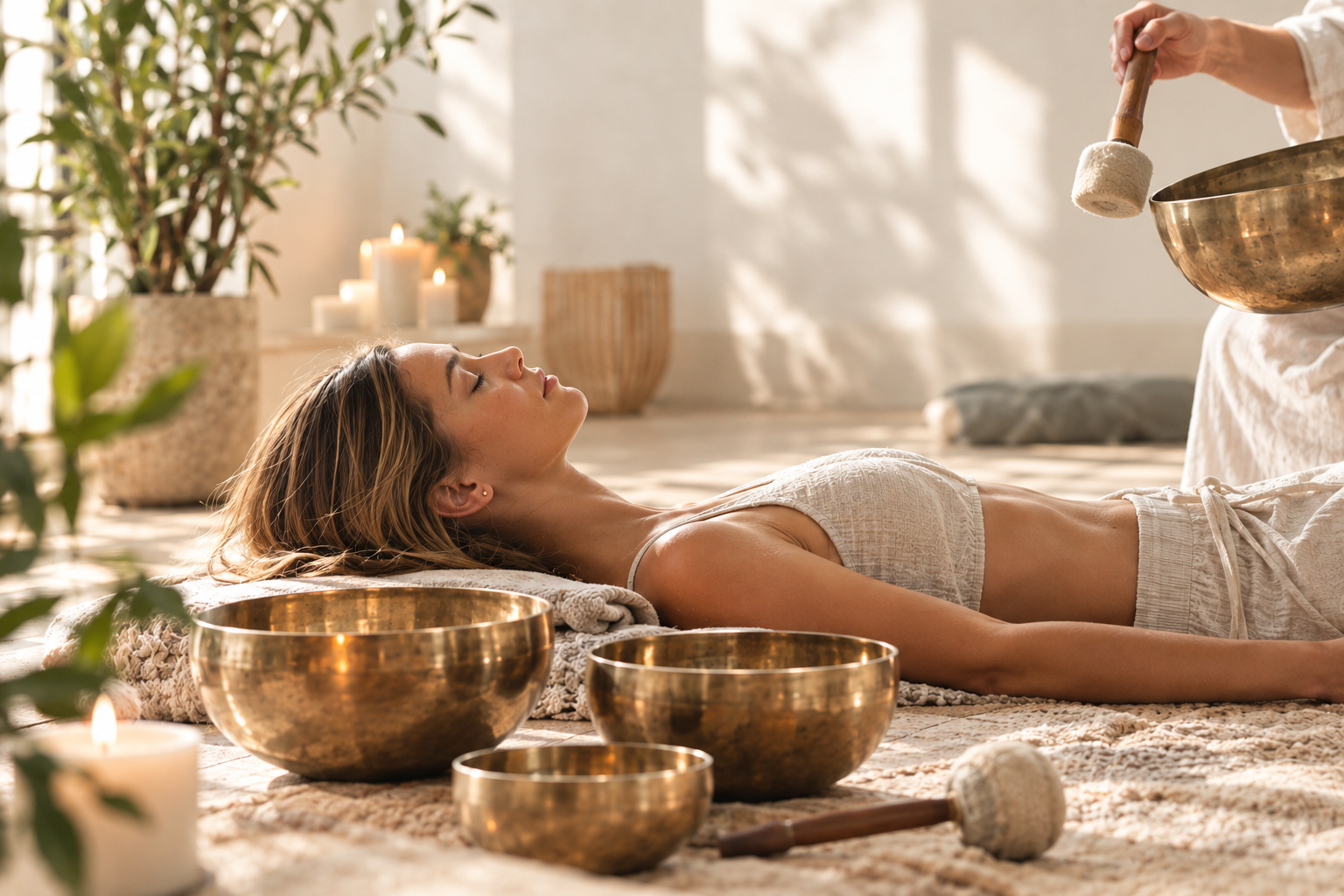
Sound healing, sometimes offered as a sound bath, uses sounds and vibrations to create a relaxing environment.
Sessions may involve singing bowls, gongs, chimes, tuning forks or other instruments. You usually lie down or sit comfortably while the practitioner plays the instruments around you.
Some people enjoy focusing on the sounds, while others find their minds wander or drift into a dreamy state.
Potential benefits include:
- Creating time for deep relaxation.
- Offering a break from screens and daily distractions.
- Helping some people unwind after a busy day.
- Providing a calming sensory experience.
- Encouraging a feeling of peace and presence.
6 Types of Mindfulness Classes to Try
Not sure where to start? Here are six popular options to explore.
1. Breathwork
Best for: People who want to explore their breathing and take a dedicated break from a busy day.
Breathwork classes guide you through different breathing patterns, sometimes with music, visualisation or relaxation exercises.
The experience can range from slow and calming to more energetic and emotionally intense.
2. Sound Healing and Sound Baths
Best for: People who enjoy music, peaceful environments and lying down without having to do anything.
You simply get comfortable and listen while instruments create a relaxing soundscape.
This is a good option if traditional meditation feels difficult because you struggle to sit still or keep your mind focused.
3. Guided Meditation
Best for: Beginners who want a simple introduction to mindfulness.
A teacher guides you through the practice, which might involve focusing on your breath, relaxing your body or imagining a peaceful place.
You don’t need any experience, and you can also try guided meditation at home.
4. Yoga Nidra
Best for: People looking for a restful practice without a physically demanding workout.
Often called yogic sleep, Yoga Nidra is a guided relaxation practice usually performed lying down.
The instructor may guide your attention through different parts of the body, your breathing and visualisations. The aim is to encourage deep relaxation while remaining gently aware of the experience.
5. Restorative Yoga
Best for: People who enjoy gentle movement and want to slow down.
Restorative yoga uses comfortable positions, often supported by bolsters, blankets and cushions. Poses are held for longer periods, allowing you to settle into each position without pushing your body.
Unlike a more active yoga class, the focus is on comfort, stillness and relaxation rather than strength or flexibility.
6. Mindful Movement

Best for: People who find it easier to relax when they are moving.
Mindful movement includes practices such as gentle yoga, tai chi and slow mobility exercises.
Instead of concentrating on performance, repetitions or burning calories, you focus on your breathing, sensations and how your body feels as you move.
It’s a lovely way to combine movement and mindfulness without another intense workout.
5 Signs You Might Benefit From More Mindfulness
You don’t need to wait until you’re completely exhausted to make time for yourself. Sometimes, small signs suggest you could benefit from slowing down.
1. You feel stressed or overwhelmed.
Your mind is constantly racing, and even when you have finished work, you struggle to switch off.
2. You’re struggling to relax before bed.
You feel tired but keep thinking about your to-do list, tomorrow’s plans or everything that happened during the day.
3. You feel disconnected from yourself.
You spend so much time focusing on work, responsibilities and other people that you rarely stop to check in with how you feel.
4. You feel emotionally drained.
You notice that you feel more irritable, frustrated or low than usual and could use some time to recharge.
5. You feel constantly switched on.
Even during your downtime, you check your phone, think about work or feel the need to be productive.
A mindfulness class won’t magically fix everything, but it can provide a dedicated space to pause and notice what you need.
If low mood, anxiety or sleep problems persist or affect your daily life, consider speaking to a healthcare professional rather than relying on relaxation classes alone.
How to Choose Your First Mindfulness Class
My advice? Start with whatever sounds enjoyable rather than choosing a class because it’s trending.
- Want something gentle? Try guided meditation or restorative yoga.
- Want a sensory experience? Book a sound bath.
- Curious about breathing techniques? Try a beginner-friendly breathwork class.
- Find it hard to sit still? Explore mindful movement.
- Want to relax without much physical effort? Look into Yoga Nidra.
Check the class description, and whether the session is suitable for beginners. You should feel comfortable asking questions or stopping if an exercise doesn’t feel right for you.
For more intense breathwork, let the instructor know about relevant health conditions or concerns beforehand and follow their safety guidance.
Can You Practise Mindfulness at Home?
Absolutely! You don’t need to book a luxury spa experience to make mindfulness part of your routine.
Here are three simple ideas to try this week:
Take five minutes to breathe. Sit somewhere comfortable and breathe gently, without forcing or holding your breath. Notice how the air feels as you breathe in and out.
Try a guided meditation. Put your phone on silent, find a comfortable position and follow an audio meditation.
Create a relaxing evening ritual. Dim the lights, make a cup of herbal tea, put on calming music and give yourself ten minutes without distractions.
You can also explore the NHS breathing exercises for stress for a simple technique to practise at home.
Small moments of mindfulness can be easier to maintain than trying to completely change your lifestyle overnight.
My Final Thoughts: Is Mindfulness Worth Trying?

After trying breathwork and sound healing, I can understand why mindfulness is becoming such a popular part of the wellness industry.
We spend so much time trying to do more, exercise harder, eat better and become more productive. But how often do we make time to simply stop?
For me, the biggest takeaway was how different I felt after each session. Breathwork left me feeling refreshed and energised, while sound healing gave me a sense of calm, gratitude and peace.
Both experiences reminded me that wellness isn’t just about what we do to improve ourselves. Sometimes, it’s about giving ourselves the space to rest.
You don’t need to try every new wellness trend or book an expensive spa treatment. Start with something simple, find what works for you and make a little room for recovery alongside your usual routine.
Because sometimes, the best thing you can do for yourself is absolutely nothing.
Have you tried breathwork, sound healing or another mindfulness class? I’d love to hear about your experience in the comments!
Disclaimer
This article shares personal experiences and general wellness information for educational purposes only. Mindfulness classes and relaxation practices are not a substitute for professional medical or mental health advice. Individual experiences and results may vary.
Leave a Reply