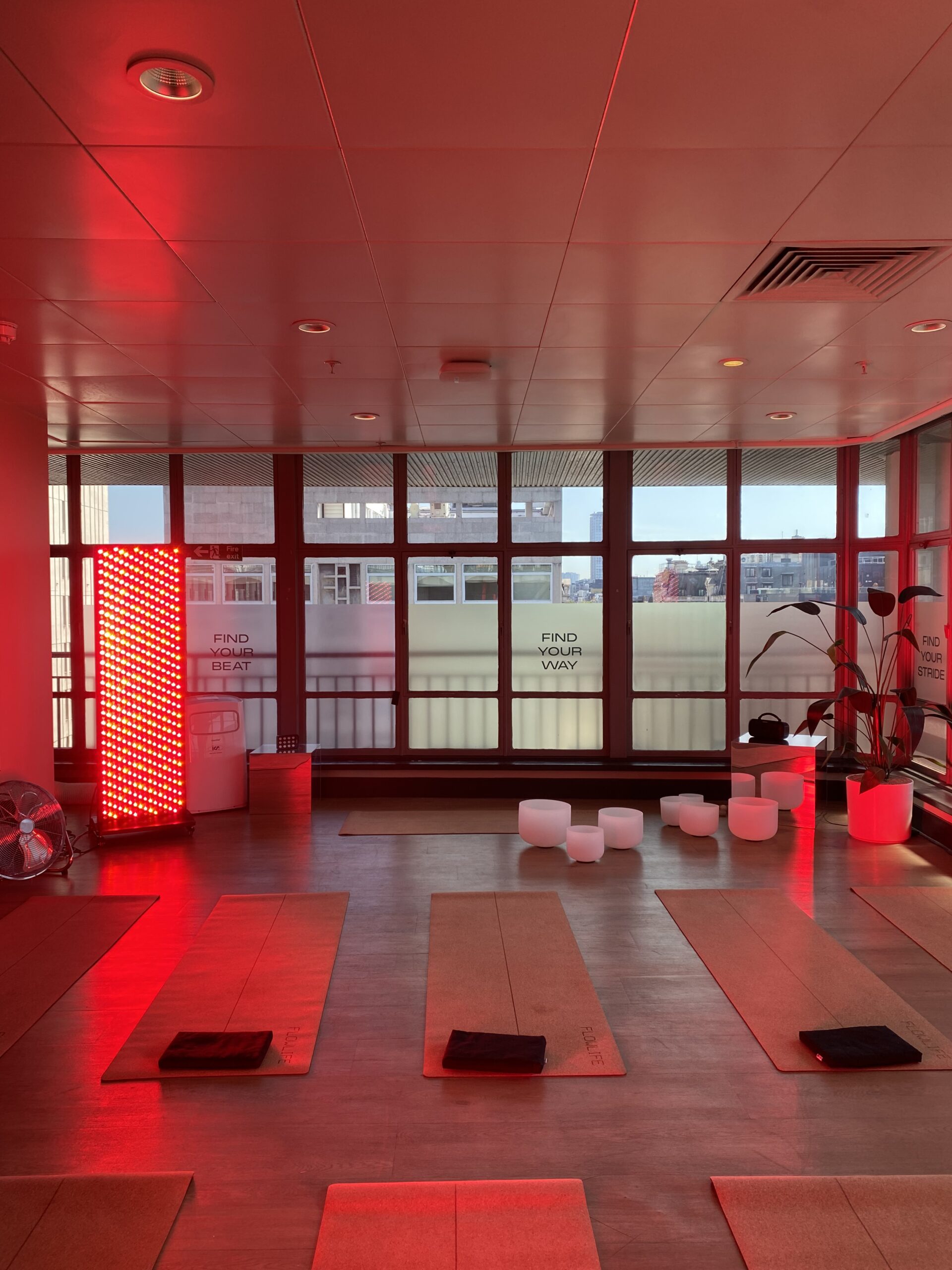
Red light Pilates is one of the newest trends in wellness, combining movement with the benefits and atmosphere of red light therapy. But is it actually worth trying?
I was recently invited to a red light Pilates class with Flowlife at John Lewis Oxford Street. I wasn’t quite sure what to expect.
I’ve used red light therapy before, including red light beds where the panels are positioned much closer to the body, so I was slightly sceptical about whether being in a room illuminated by red light would feel or do anything different.
I have to say, I loved it.
The feeling was almost like being on a rooftop at sunrise — warm, calming and as though you were being kissed by the sun.
It instantly changed the atmosphere of the room. I felt more awake and positive, and the whole experience felt very different from walking into a typical London Pilates studio.
The Pilates class was followed by meditation and sound healing, and even with my eyes closed, I could still feel that beautiful warmth around me.
It made me think about how interesting red light could be as part of a broader mind and body wellness experience.
And while it is summer in England as I’m writing this and we’ve been lucky enough to have plenty of sunshine, I kept thinking about winter.
Imagine getting up early on a dark January morning and, instead of walking into another underground London studio, you walk into a warm room glowing like sunrise, move your body, breathe, meditate and start your day surrounded by light.
For me, that’s a big yes.
But what exactly is red light therapy, and what makes it so interesting?
What is red light therapy?

Red light therapy is also known as photobiomodulation. It uses specific wavelengths of red and near-infrared light to interact with the body.
At a cellular level, light can interact with components within our cells, including mitochondria, which are involved in producing energy for the cell. This is one of the main reasons red and near-infrared light have become so interesting in wellness and recovery.
The idea is simple: light interacts with our cells and can influence cellular processes.
This is different from sunlight and tanning beds because therapeutic red and near-infrared light does not rely on ultraviolet radiation.
Red light therapy is now used in everything from facial devices and beauty treatments to full-body beds and larger light panels.
And the intended benefit can be quite different depending on the device.
What are the benefits of red light therapy?
One of the main reasons red light therapy is used is to support cellular function.
Our cells need energy to carry out their normal functions, and mitochondria play a central role in producing that energy. Photobiomodulation research looks at how red and near-infrared light interacts with these cellular processes.
This is also why red light therapy is often associated with recovery and inflammation.
Research has looked at photobiomodulation in areas including pain, inflammation, tissue repair, skin health, hair growth and exercise recovery. A large 2025 umbrella review of clinical trials found beneficial effects for a number of health outcomes, including some areas of pain, fatigue, hair density and cognitive function.
For me, the most interesting benefits are:
- Supporting cellular function
- Supporting the body’s natural recovery processes
- Helping manage inflammation
- Supporting skin health
- Supporting tissue repair
- Promoting a feeling of wellbeing and relaxation
- Creating a warm, energising wellness environment
Red light therapy isn’t just about what happens on the surface of the skin. Depending on the wavelength and how the treatment is delivered, red and near-infrared light can be used as a broader whole-body wellness tool.
Why does red light leave you with a glow?
The glow is probably one of the reasons red light therapy has become so popular in the beauty and wellness world.
Red light is widely used in skincare because of its relationship with skin health and tissue repair. Research supports its use in areas such as skin rejuvenation, although the exact results depend on the device and treatment parameters.
But there is also something about the experience itself.
The warmth of the light, the atmosphere and the feeling of having taken time out for yourself can leave you looking — and feeling — refreshed.
And let’s be honest, there is something quite beautiful about leaving a treatment with that post-wellness glow.
Can red light support mood and energy?
This is one of the things I noticed most during my Pilates class.
I felt energised and positive afterwards.
Red light therapy is being investigated for its effects on mood, and research into photobiomodulation and mental health is growing.
But I also think the environment matters.
You’re moving your body, breathing, listening to music, spending time away from your phone and being surrounded by warm light.
Add meditation and sound healing afterwards and you’ve created a very different experience from simply walking into a gym.
For me, this is where red light Pilates becomes particularly interesting.
It isn’t necessarily about expecting one treatment to do everything. It’s about creating an environment that makes you want to move, slow down and start your day differently.
Red light therapy and your daily rhythm
Light is one of the most important signals our bodies use to regulate our internal circadian rhythms, which influence sleep, alertness and mood. This is why natural daylight — particularly in the morning — is so important for our daily rhythm.
This is also why I find the idea of morning wellness classes so appealing.
A red light Pilates studio isn’t the same as natural outdoor daylight or a clinical bright-light therapy treatment, but the overall experience can feel wonderfully energising.
For me, the real appeal is creating a morning ritual around light, movement and wellbeing, particularly during the darker months.
How often should you have red light therapy?
There isn’t one frequency that works for every red light device or every goal.
The ideal approach depends on the type of device, the wavelength, the intensity and how long you are exposed to it.
A facial LED mask, a full-body red light bed and a red light Pilates class are all very different experiences, so I wouldn’t treat them as interchangeable.
If you’re using a specific red light device, it’s best to follow the manufacturer’s recommended protocol.
And more isn’t necessarily better — consistency and using the right treatment for your goal are more important than simply increasing the amount of time you spend under the light.
Red light mask vs red light bed vs red light panels
This is something I think is particularly important because red light therapy isn’t one single treatment.
Different devices are designed with different purposes in mind.
Red light face masks for beauty and skin

A red light mask is designed primarily for the face.
Because it sits close to your skin, it is a targeted treatment and is particularly popular as part of beauty and skincare routines.
The focus is generally on:
- Skin health
- Supporting collagen production
- Skin rejuvenation
- A smoother-looking complexion
- That post-treatment glow
If your main interest is beauty and skincare, a facial red light device makes the most sense.
Red light beds for whole-body cellular support
A red light bed is designed to expose a much larger area of the body to red and often near-infrared light.
This makes it more of a whole-body treatment rather than a targeted beauty treatment.
The focus can be on supporting the body more broadly, including cellular function, recovery and inflammation.
This is the type of red light therapy I was already familiar with before trying red light Pilates.
The big difference is that you’re lying relatively close to multiple panels, whereas a Pilates class uses light throughout the room while you move.
Red light panels and red light wellness rooms for the mind and body experience

This is where I think the new red light Pilates concept gets really interesting.
Large panels or multiple light sources can illuminate a whole room, creating a completely different experience.
Rather than lying still in front of a device, you’re moving, exercising, breathing and interacting with the environment.
The experience can be particularly appealing for:
- Morning energy and alertness
- Creating a positive atmosphere
- Mind-body practices
- Pilates and movement
- Meditation
- Relaxation
- Recovery
- Creating a wellness ritual
And because the entire room changes, the psychological experience is completely different.
You’re not just having a red light treatment.
You’re stepping into a different environment.
Is red light Pilates worth trying?
For me, absolutely.
But I wouldn’t look at it as a replacement for traditional Pilates or a standalone miracle wellness treatment.
What I loved was the combination.
Movement + light + atmosphere + mindfulness + recovery.
The Pilates gives you the physical practice. The red light transforms the environment. Meditation and sound healing give you a chance to slow down afterwards.
Together, it becomes much more than a workout.
And I think that is where luxury wellness is becoming increasingly interesting: treatments and experiences don’t necessarily have to fit into one category.
A Pilates class can also be a morning ritual.
A red light session can also be a sensory experience.
And wellness can be about how something makes you feel, as well as what it is designed to do.

Would I do it again?
Yes.
Especially in winter.
It’s easy to appreciate natural sunlight when it’s warm and bright outside. But living in London means there are plenty of mornings when the sky is still dark when you leave the house.
On those days, the idea of starting the morning with movement, warm red light, meditation and a beautiful atmosphere sounds very appealing.
The science behind photobiomodulation continues to develop, particularly around cellular function, recovery and inflammation, while red light is already well established as an area of interest in skin and wellness.
But for me, wellness isn’t always about finding one treatment that promises to solve everything.
Sometimes it’s about creating better rituals.
And a red light Pilates class is one wellness ritual I would happily add to my routine.
Disclaimer: This article is based on my personal experience and is intended for general wellness and informational purposes only. Red light therapy is not a substitute for medical advice or treatment. If you have a medical condition or are unsure whether red light therapy is suitable for you, speak with a qualified healthcare professional.